

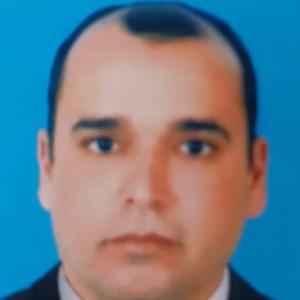
Mr. TAHER ELMASRI
- َQualifications: Master degree
- Academic Rank: Lecturer
- Department of Biology
- faculty of Education Tripoli
Contact
| All | since 2021 | |
|---|---|---|
| Citations | ||
| h-index | ||
| i10-index |
Roles
- I have served as a faculty member in the Department of Biology, Faculty of Education, University of Tripoli, Libya, since 2022. During my time in the department, I have taught a number of undergraduate courses, including General Mycology, Medicinal Plants, and Plant Taxonomy, alongside several other courses spanning the field of biological sciences, consistently combining theoretical foundations with practical laboratory training to equip students with the scientific skills needed for independent research.
- Alongside my teaching duties, I have supervised numerous undergraduate graduation projects, with particular focus on the study of medical and marine fungi and related topics in mycology, reflecting my interest in mentoring and guiding the next generation of researchers in this field.
- I was entrusted with the role of Research and Consultancy Coordinator within the Biology Department from 2022 until 17 October 2023, during which I contributed to guiding and following up on the department's research and consultancy activities. Building on this record of service, I was appointed Head of the Biology Department, Faculty of Education, University of Tripoli, effective 18 October 2023 to the present — a role that encompasses academic leadership, oversight of academic plans, quality assurance, and participation in the department's strategic planning.
- My primary research interest lies in aquatic fungi, with particular emphasis on marine mycology, and I maintain several active research interests in this field. I have published numerous scientific papers in peer-reviewed journals, in collaboration with researchers from different countries. Among my notable scientific contributions is a published paper on the fungi associated with the seagrass Posidonia oceanica, alongside two further papers currently under publication — reflecting my continued scientific output and engagement with current research developments in my specialty.
- Through this integration of teaching, research supervision, administrative leadership, and scientific activity, I continue to fulfill my role in serving the department, faculty, and university, while strengthening the presence of Libyan scientific research in the field of marine and environmental mycology at both the local and international levels..
Careers
I worked as a secondary school teacher from 1999 to 2010, before moving to the role of educational inspector at the Tripoli Educational Inspection Office, a position I held from 2010 to 2022. In parallel, I served as an adjunct/collaborating professor in the Department of Biology, Faculty of Education, University of Tripoli, from 2010 to 2021, before being appointed a full-time faculty member in the same department from 2022 to the present.
During my time at the Tripoli Educational Inspection Office, I carried out numerous tasks and responsibilities related to this field, most notably preparing and reviewing Biology exam questions for the secondary school certificate, reviewing appeals submitted on these questions, delivering training courses for teachers and laboratory technicians at secondary schools, and administering entrance examinations for the educational inspection competition.I also made a point of attending numerous academic conferences, including the Basic Sciences Conference at the Faculty of Science, University of Gharyan, and the Biotechnology Conference in Misrata, reflecting my continuous engagement with developments in my field of specialization.On 18 October 2023, I was appointed Head of the Biology Department, Faculty of Education, University of Tripoli — a position I continue to hold to this day. During this period, I have also served as a member of the department's final exams committee for the Fall 2025 and Spring 2025 semesters at the faculty, and I led the department to obtain four-year programmatic accreditation, an achievement that reflects the integrated institutional efforts made in teaching, administration, and quality assurance.
Research Interests
I am interested in the study of fungi and the diseases they cause in plants and humans, with a particular interest in the study of marine fungi in Libya, where I have conducted numerous studies in this field as part of a multidisciplinary research team.
My marine research has addressed the isolation and taxonomic classification of fungi associated with marine sponges, specifically Spongia officinalis and Sarcotragus foetidus, along the Libyan coast, alongside the study of cellulolytic fungi isolated from driftwood using wood-bait traps along the Tripoli coastline, aiming to identify marine fungi capable of degrading cellulosic materials for potential biotechnological and environmental applications.
I have also extended my research interest to include fungi associated with the seagrass Posidonia oceanica in Libya, through the preparation of a scientific review paper comparing fungal records along the eastern and western Libyan coasts, as well as a study of endophytic fungi associated with the reed plant Phragmites australis in the Ain Zara area of Tripoli.
In addition to marine and environmental fungi, my research interest has extended to the medical aspect of mycology, through a study addressing the level of knowledge of tinea corporis and tinea unguium among female students of the Faculty of Education, including field-based fungal isolation from Bir Al-Osta Milad Hospital, reflecting my interest in connecting theoretical knowledge with practical application in the study of fungal diseases affecting humans.I have also prepared a research proposal on fungi associated with the grapevine (Vitis vinifera) in Libya, as part of my ongoing effort to expand the scope of research in plant and environmental mycology.Overall, my research activity centers on studying fungal diversity across marine, plant, and medical environments in Libya, with the aim of contributing to a deeper understanding of the role of fungi in these environments, and linking local findings to the international scientific context through publication in peer-reviewed journals and collaboration with researchers from different countries.
External Activities
have no notable activities outside the faculty or university, with the exception of scientific collaboration through participation in the preparation and publication of joint research papers with researchers from various institutions and countries.
Publications