

Al-Swani Faculty of Arts
More ...About Al-Swani Faculty of Arts
History and Institutional Profile
Al-Sawani Faculty of Arts was established pursuant to the former General People's Committee Resolution No. (308) of 2000 concerning the organization of universities in Libya and the establishment of Jafara University, which was granted legal personality and financial autonomy. Since its inception, the University commenced its academic mission through a number of faculties, among which Al-Sawani Faculty of Arts occupied a prominent position as a leading institution dedicated to higher education in the humanities and social sciences. From its earliest years, the Faculty has played a significant role in fostering academic excellence, promoting intellectual and cultural development, and preparing qualified graduates capable of contributing effectively to society and national development.
The Faculty initially comprised several academic departments, namely the Department of Arabic Language, the Department of English Language, the Department of Islamic Studies, the Department of History, the Department of Sociology, the Department of Social Work, the Department of Library and Information Science, and the Department of Geography and Geographic Information Systems (GIS). Throughout its history, these departments have made substantial contributions to the education of successive generations of graduates who have assumed distinguished roles in academic, educational, administrative, cultural, and community institutions across Libya.
In 2005, Jafara University was incorporated into the University of Tripoli, and the Faculty consequently became a branch of the Faculty of Arts at the University of Tripoli. Despite this administrative restructuring, the Faculty continued to pursue its academic mission with distinction, maintaining its campus in Al-Sawani as a well-established center for teaching, scientific research, and community service. During this period, the Faculty preserved its academic identity while strengthening its contribution to the University's educational and research objectives.
A significant milestone in the Faculty's institutional development was achieved with the issuance of the Ministry of Higher Education Resolution No. (618) of 2025, which officially separated the Faculty from the Faculty of Arts and Languages at the University of Tripoli. Under this resolution, the Faculty regained its status as an independent academic institution under the title Al-Sawani Faculty of Arts – University of Tripoli. This decision restored its independent academic and administrative identity and inaugurated a new stage in its institutional growth, reinforcing its commitment to academic quality, innovation, and excellence in higher education.
Today, Al-Sawani Faculty of Arts is committed to becoming a distinguished center of excellence in the humanities and social sciences. The Faculty continuously strives to enhance the quality of its academic programmes, advance scientific research, encourage innovation, and strengthen its engagement with the wider community in alignment with national development priorities and international standards of higher education.
The Faculty is supported by a distinguished community of academics and researchers whose scholarly contributions extend to national and international conferences, scientific forums, and peer-reviewed publications. Through their active engagement in research and knowledge dissemination, faculty members contribute to the advancement of their respective disciplines while enriching the academic environment. Guided by its mission and strategic vision, the Faculty remains dedicated to preparing highly competent graduates equipped with the knowledge, professional skills, ethical values, and critical thinking abilities necessary to contribute effectively to sustainable development and to address the evolving needs of society at both the national and international levels.
Facts about Al-Swani Faculty of Arts
We are proud of what we offer to the world and the community
Academic Staff
Who works at the Al-Swani Faculty of Arts
Al-Swani Faculty of Arts has more than 90 academic staff members
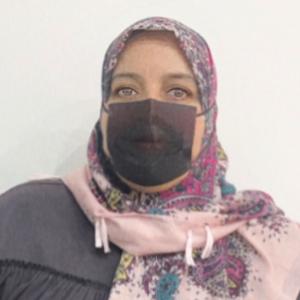
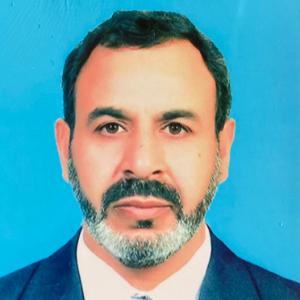
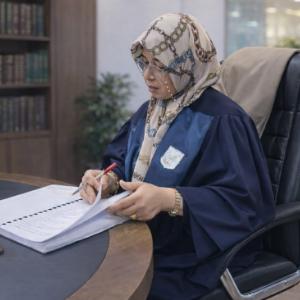
Ms. fatma hassen abdalla naama